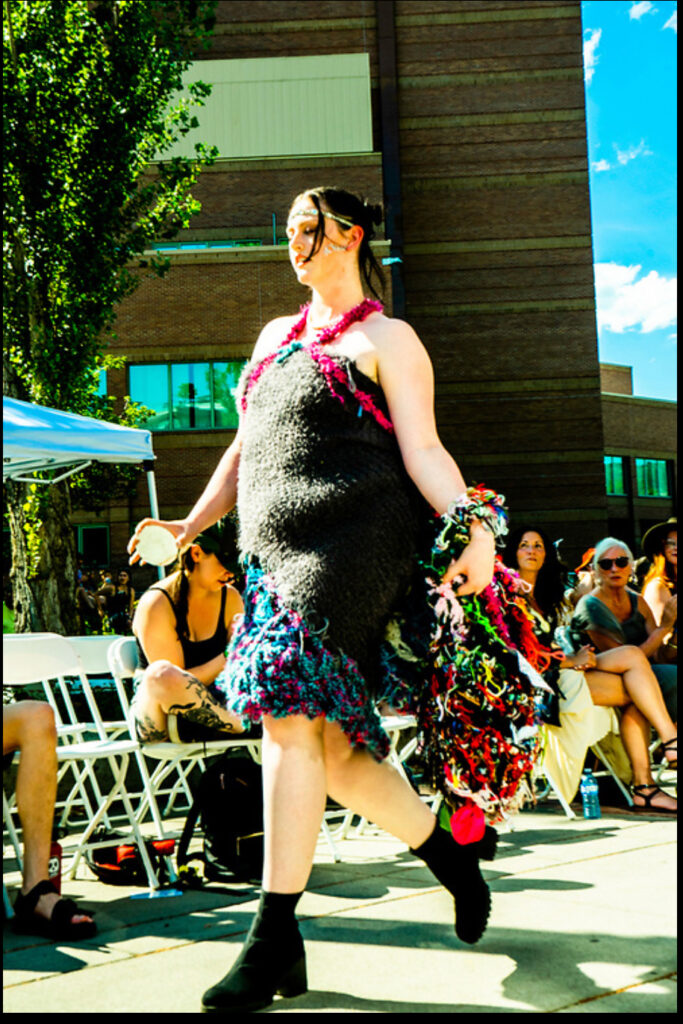
As the Equity Executive Member for TRUSU, I have helped create and execute the campus clothing exchange for 3 years in a row. My experience has been nothing short of amazing! Check it out ^^
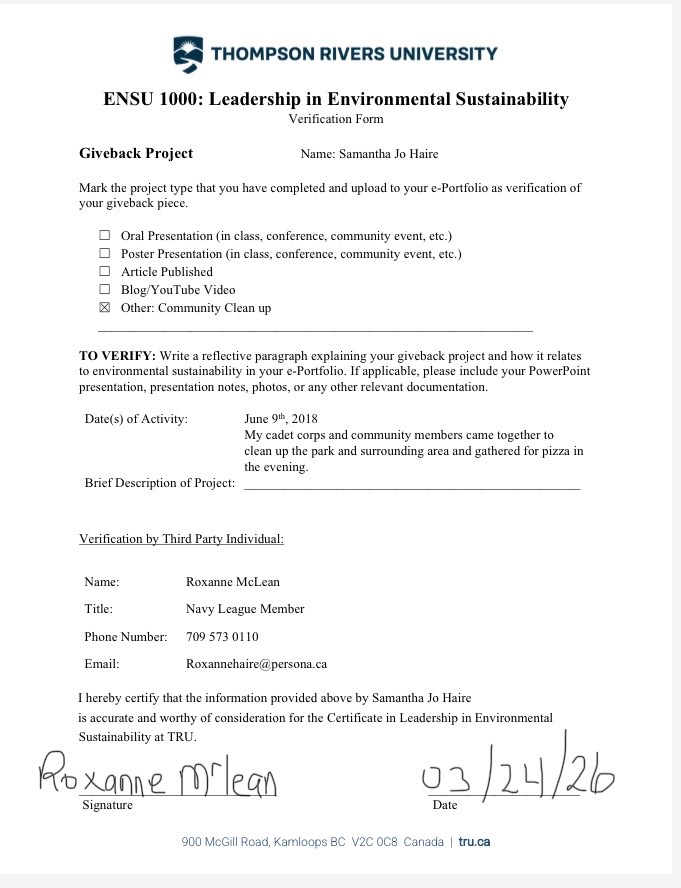
Give Back Project – Community Clean Up
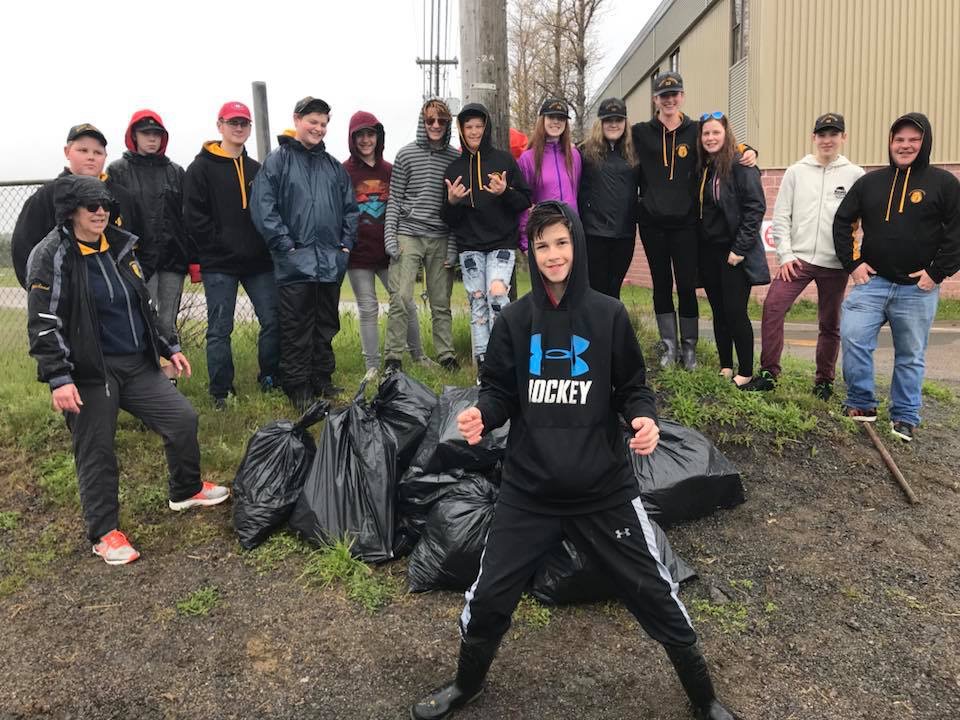
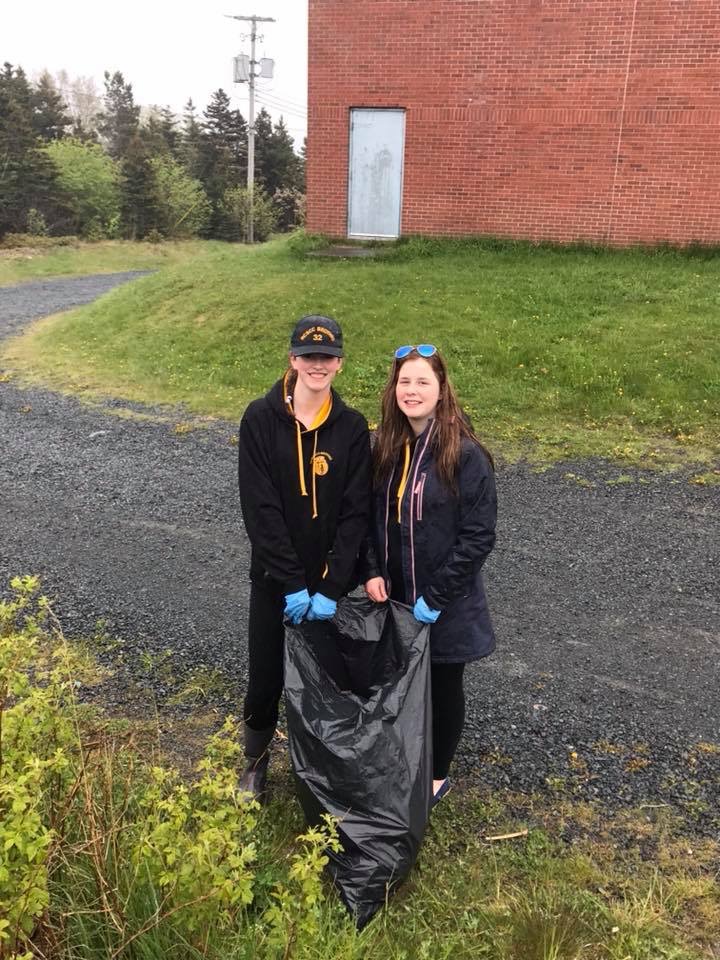
My “Give Back Project,” organized through my cadet corps, 32 RCSCC Beothic, was a community-based environmental initiative focused on improving the condition of a local playground and surrounding field. The goal of the project was to bring together cadets and community members to remove litter, restore the space, and promote a cleaner and more welcoming environment for public use. Despite challenging weather conditions, including steady rain, the event was successfully carried out and demonstrated the positive impact that organized, local efforts can have on shared spaces.
The clean-up day involved coordinating volunteers, gathering supplies such as garbage bags and gloves, and dividing the area into sections to ensure that the entire space was covered efficiently. Participants worked together to collect various types of waste, including plastic packaging, food containers, paper debris, and other litter that had accumulated over time. The condition of the playground and field prior to the event reflected a common issue in public spaces, where waste is gradually left behind and not immediately addressed. By the end of the clean-up, the area was visibly transformed into a cleaner, safer, and more enjoyable environment.
My role in the project included both planning and active participation. I contributed to organizing the event by helping coordinate volunteers and ensuring that the clean-up ran smoothly. During the event, I worked alongside other participants to collect and sort waste, covering designated sections of the playground and field. I also supported efforts to keep participants engaged and motivated throughout the process, particularly given the rainy conditions. Being actively involved allowed me to contribute directly to the success of the project while also supporting the overall organization of the event.
To encourage participation and maintain a high level of engagement, an incentive was introduced in the form of a cash prize for the individual who collected the most waste. This added a competitive and interactive element to the clean-up, motivating participants to contribute more actively. The incentive helped increase both the quantity of waste collected and the overall enthusiasm of those involved. In addition to the prize, a pizza party was hosted after the clean-up, providing participants with an opportunity to relax, socialize, and celebrate their collective efforts. This aspect of the event helped create a positive and rewarding atmosphere, reinforcing the value of participation.
The benefits of the project were both immediate and long-term. In the short term, the playground and field were restored to a cleaner condition, making them safer and more appealing for community use. Removing litter reduced potential hazards, such as sharp objects or harmful materials, and improved the overall appearance of the space. This contributes to increased use and enjoyment of the area by families, children, and other community members.
Beyond the immediate physical improvements, the project also contributed to a stronger sense of community. Bringing together cadets and local participants created an environment of cooperation and shared responsibility. Events like this encourage individuals to take pride in their surroundings and recognize the importance of maintaining public spaces. The combination of teamwork, incentives, and post-event celebration helped foster a positive experience that can encourage continued involvement in similar initiatives.
Additionally, the project highlighted the effectiveness of organized, small-scale environmental efforts. Rather than relying on large-scale interventions, the clean-up demonstrated that a focused group of individuals can make a meaningful difference in a short period of time. The visible results of the effort serve as a reminder of the impact that consistent, community-driven actions can have on maintaining and improving local environments.
In conclusion, my Give Back Project with 32 RCSCC Beothic successfully brought together community members to clean and restore a local playground and field. Through careful organization, active participation, and the use of incentives, the event achieved both environmental and social benefits. The improved condition of the space, along with the sense of community created during the event, demonstrates the value of local initiatives in supporting cleaner and more sustainable environments.
BIOL 2160 – Introduction to Microbiology In BIOL 2160, my understanding of environmental sustainability expanded through recognizing the essential role microorganisms play in maintaining ecosystem function. I came to see how processes like decomposition and nutrient cycling are driven by microbes, which directly impact soil health and water quality. This shifted my perspective by showing that sustainability is not only about visible environmental actions but also about supporting the microscopic systems that sustain life.
BIOL 2170 – Introduction to Ecology Through BIOL 2170, I developed a deeper appreciation for how interconnected ecosystems are and how human actions can disrupt or support these systems. Learning about energy flow, biodiversity, and population dynamics helped me understand the importance of balance within ecosystems. This reinforced the idea that environmental sustainability requires protecting these relationships and being mindful of how even small changes can have widespread ecological impacts.
BIOL 3210 – Microbial Ecology In BIOL 3210, my perspective on sustainability became more detailed and systems-focused, particularly through understanding microbial interactions within different environments. I gained insight into how microbial communities influence larger ecological processes, such as nutrient cycling and pollution breakdown. This experience strengthened my understanding of sustainability by highlighting the complexity of environmental systems and the importance of considering both visible and microscopic factors in environmental management.
Category B: Volunteering – 5 points
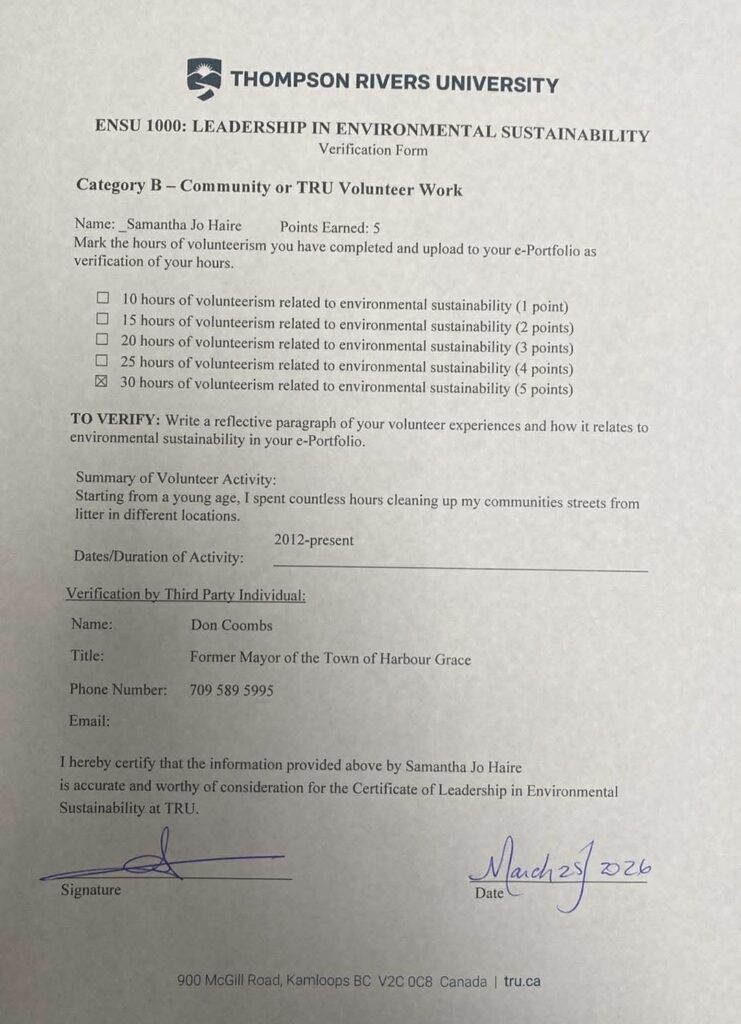
Completing over 30 hours of volunteer work focused on cleaning up my community back home through green teams, local organizations, and my own independent efforts has significantly shaped how I approach environmental sustainability. Through these experiences, I became more aware of how persistent and widespread litter and waste can be, especially in spaces that are used daily but not consistently maintained. Actively participating in clean-ups shifted my role from being a passive observer of environmental issues to someone who takes responsibility for improving local conditions. I also began to recognize the value of consistency can lead to noticeable and lasting improvements in a community. Volunteering in both organized groups and on my own showed me that environmental action does not always require large initiatives; individual effort still contributes meaningfully. These experiences have made me more conscious of my own environmental impact and more committed to maintaining cleaner, more sustainable spaces in the future, while also encouraging others to take part in similar efforts.
Category F: Course-related work – 5 points
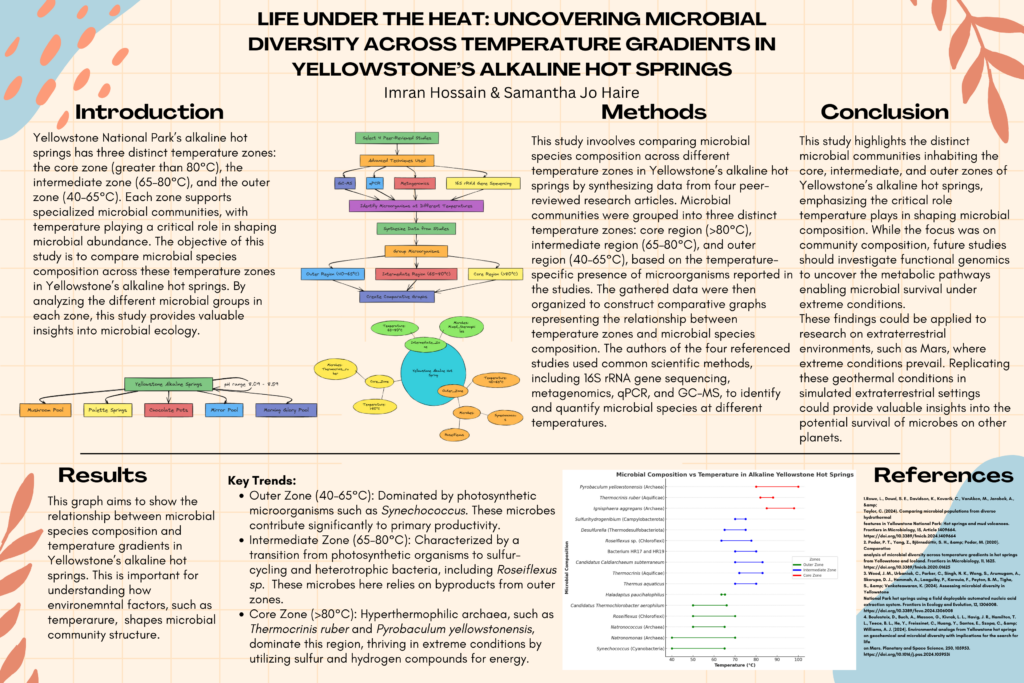
Having our research poster published on the Open Science Framework and presenting it was a really rewarding experience that brought together both the academic and practical sides of my work. Seeing our project formally shared on a public platform made the research feel more meaningful, as it contributed to a broader scientific community rather than just being an assignment. During the presentation, I was able to clearly communicate our findings on microbial diversity across temperature gradients in Yellowstone’s alkaline hot springs, and I found that explaining the results to others helped reinforce my own understanding of the topic. Engaging with questions and feedback was especially valuable, as it pushed me to think more critically about our methods, data interpretation, and the broader implications of our work. The presentation itself went smoothly, and I felt confident discussing both the scientific content and the reasoning behind our approach. Overall, this experience strengthened my ability to communicate complex scientific ideas, increased my confidence in presenting research, and highlighted the importance of sharing scientific knowledge in accessible and collaborative spaces.